Former D’Tigers captain Olumide Oyedeji has explained why he is challenging the outcome of the October 15 Nigeria Basketball Federation (NBBF) elective congress, alleging constitutional violations, exclusion of eligible stakeholders, irregularities in delegate selection and what he described as a compromised electoral process.
Oyedeji, who lost the NBBF presidential election to Dr Mustapha Abdullahi, Director-General of the Nigeria Energy Commission, said his appeal was not directed at the winner but at alleged flaws in the process that produced the new federation leadership.
Speaking to FIRST ZEALMEDIACAST BLOG via telephone from Guangzhou, China, where he is on official business, the proprietor of Hoops and Reads basketball club
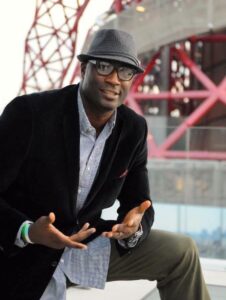
Olumide Oyedeji
identified several grounds for challenging the election, insisting that the circumstances surrounding the congress raised serious questions about its credibility and compliance with the NBBF Constitution.
“I have nothing against DG Mustapha Abdullahi who was declared the winner and new NBBF President at the Elective Congress. But there are numerous flaws with the entire process which was apparently staged managed,” Oyedeji said.
One of Oyedeji’s principal grievances concerns the alleged unlawful expulsion of eight NBBF board members by the outgoing president.
He argued that the former president lacked the constitutional authority to remove the members in the manner described and accused the leadership of proceeding with meetings and making critical decisions without the required quorum.
According to Oyedeji, the affected members were reinstated only two days before the Extraordinary Congress in Yola, after decisions had allegedly been taken by a group that did not constitute a valid quorum.
He cited a letter dated August 14, 2026, reportedly signed by seven of the affected board members, who protested their exclusion and warned of its potential consequences.
Oyedeji contended that if the decisions preceding the election were taken in violation of the federation’s constitution, the validity of the subsequent electoral process should also be examined.
Oyedeji also challenged the circumstances under which the Extraordinary Congress in Yola was convened, alleging that there was no written request from two-thirds of the NBBF board members as required by the applicable constitutional provisions.
He further questioned why the official minutes of both the Extraordinary and Elective Congresses had not been made available, arguing that a communiqué could not serve as a substitute for the formal records of proceedings.
According to him, the communiqué issued after the Extraordinary Congress reportedly listed 44 members instead of the 50 he said were recognised under the relevant constitutional membership structure.
He alleged that representatives of NAPHER-SD, players, coaches and referees were denied the opportunity to participate, raising concerns about whether all eligible stakeholders were properly represented when decisions affecting the election were taken.
The alleged exclusion of these constituencies for Oyedeji was not a minor administrative issue but a fundamental question about the legitimacy of the process.
The former presidential candidate also raised concerns over the removal of state basketball association chairpersons and the replacement of delegates ahead of the congress.
He cited the cases of Kwara, Zamfara and Osun, as well as representation issues involving Benue, Ekiti and other states, questioning whether the changes complied with established procedures.
Oyedeji particularly highlighted a discrepancy involving Benue State’s replacement of its original representatives, Igoche Mark and retired Colonel Sam Ahmedu, with Fanen Iornem and Mathew Shije.
He said the replacement letter, signed by the state Commissioner for Sports, was dated August 17, 2026, while the NBBF’s request for states to submit their delegates was dated September 10 and reportedly emailed on September 13.
He argued that the difference in dates required clarification, insisting that the identity and legitimacy of delegates were critical to determining who could participate in the congress and influence its decisions.
Another major reason for the appeal was the omission of Oyedeji’s name from the published list of candidates for the South-West representative position.
He explained that he submitted his nomination to contest both the South-West board position and the NBBF presidency, based on his interpretation of the federation’s constitutional requirements for candidates seeking executive positions.
However, his name was missing from the final list published by the Electoral Committee two days before the October 15 election.
Although his name was eventually added to the South-West race during the congress, Oyedeji maintained that the late correction did not reverse the damage caused by his initial exclusion.
He claimed that some of his supporters had switched their allegiance to other candidates after believing he was no longer contesting.
He also questioned why similar omissions did not affect Dr Abdullahi, who contested for the North-Central representative position alongside the presidency, or Ugo Udezue, who contested for the South-East representative position alongside the vice-presidency.
Oyedeji argued that the late publication of the candidates’ list and the subsequent correction of his name raised questions about compliance with the electoral timetable and the equal treatment of candidates.
Oyedeji further criticised the Appeals Committee’s decision to question the authenticity of his tax clearance certificate, which he said had already been submitted to and accepted by the Electoral Committee during screening.
He requested that the committee identify the specific evidence or regulatory provision justifying the renewed scrutiny and questioned whether other candidates had faced similar examinations.
He also disputed an allegation by the Electoral Committee that he attempted to impersonate a Lagos State delegate at the Extraordinary Congress in Yola.
Oyedeji maintained that he was the vice-chairman of the Lagos State Basketball Association and had received an official letter appointing him to represent the state before being asked to stand down.
The former D’Tigers captain also faulted the Appeals Committee for giving him 24 hours to respond to a query and subsequently indicating that his appeal would no longer be considered because his response had not been received within the stipulated period.
He argued that, to his knowledge, the NBBF Constitution and applicable electoral guidelines did not prescribe such a deadline for responding to the query or authorising the dismissal of a properly filed appeal on that basis.
He maintained that the handling of his appeal raised concerns about procedural fairness and his right to be heard.
Beyond the specific allegations, Oyedeji expressed concern that the disputed electoral process could sideline experienced basketball stakeholders who had contributed to the sport’s development and the representation of Nigeria internationally.
He alleged that individuals with established records in basketball administration and development were being excluded from the federation’s leadership, while political interests were influencing the composition of state associations and their representatives.
He warned that allowing such practices to continue could turn national sports federation elections into extensions of the country’s partisan political system.
Oyedeji, however, stressed that his challenge was about the integrity of the election rather than personal opposition to Abdullahi.
He said he intended to pursue his appeal through the appropriate channels, regardless of the eventual outcome.
“My appeal goes on until the final bus stop and a positive result or otherwise, it is my belief that it will expose the rot that was the 2026 NBBF Elective Congress and pave the way for a better and more inclusive NBBF/National Sports Federations Elections in future,” he said.
The allegations remain Oyedeji’s account of the disputed election. Responses from the NBBF, the Electoral Committee and the Appeals Committee would be necessary to establish their respective positions on the issues raised.
